Insights
Training
On-demand



You are viewing 1 of your 2 free articles
We explore four ways to source impactful images for your charity communications and marketing


 How to use images in content marketingHow charities can use images in their contentA charity guide to image use in content marketing
Photos are incredibly powerful tools for charities. They can make an immediate emotional impact, connecting with your audience and inspiring them to take action.
There are four main ways to source images for your charity or not-for-profit: hire a professional photographer, take photos on your phone, source stock images, and use AI. To decide which route to take, it can be helpful to consider:
What is your budget?
Where and how will you use the image?
What is the shelf-life for the image? (For example, do you need it for a one-off social post or as a core brand image that can be used across a raft of comms?)
Below, we explore each way charities can use images in their content in more detail, allowing charities of all sizes to bring their work to life in a compelling way.
While hiring a photographer might feel like a big stretch for your budget, it can be a great investment. Get a photo shoot right and you’ll have a body of bespoke images to use right across your communications. This can give your charity a strong visual identity and the ability to tell powerful stories. Plus, professional photography can feature your own staff, volunteers, and service users, which can help to build trust and authenticity with your audience.
To get the best out of a photoshoot it’s important to plan ahead and brief your photographer well. You’ll need to plan the practicalities of when, where and who will be involved, as well as sharing your charity’s branding, and what emotion you want people to feel when they see the images. Make sure you have written photo usage consent from anyone featured in the images, and establish beforehand who will own the copyright to the images and write this into the contract with the photographer.
CharityComms shares a helpful film and photography briefing template and has a directory of freelancers.
This is a free, simple, and quick way to get images. It can be great for social campaigns, when you need swift, informal photos to share across your platforms. Using your phone to take photos can also be more subtle and immediate but always make sure you have consent from anyone featured.
While you might have taken thousands of snaps on your phone, it’s worth spending some time to understand exactly what your phone can do. And then play around and practice to see what gets the best results.
Generally, avoid using digital zoom as this lowers the resolution of the image, use optical zoom if you have it (or move closer to your subject), and for portraits or group shots try to capture people looking at the camera. And, as the RSPCA flags up, remember to clean your lens for sharp images.
Friends of the Earth has a handy guide on how to use smartphones to take good photos and videos. Their tips include using natural light wherever possible, avoiding shadows on people’s faces, and taking lots of photos which you can then edit later.
Image libraries offer a quick and easy way to access a huge range of photos. iStock, Getty Images and Shutterstock are some of the best known. They vary in pricing and some are free to use (such as Unsplash or Pexels). Always check you have the appropriate licence to use an image and include photographer credit lines if requested.
Image libraries can be particularly helpful if you need to source images on a regular basis, or if you can’t use service users in your images (for example, if you’re working with vulnerable people). But choose carefully as many stock images are generic and glossy and will do nothing to build trust and authenticity with your audience.
There are however an increasing number of stock image websites that offer realistic, positive, and diverse images. There are lots listed in our article on how to find inclusive stock imagery, including:
Age without limits (images of people over 50)
Disabled and Here (images of people with apparent and non-apparent disabilities)
Homelessness Impact (non-stigmatising images of people experiencing homelessness)
Nappy (images of Black and Brown people)
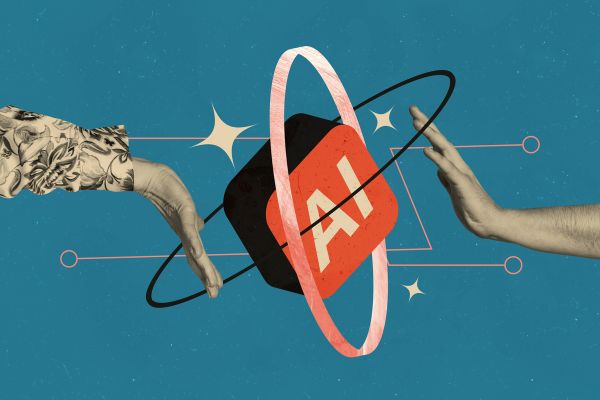
Generative AI is phenomenally speedy, and if you’re stretched for time and money you might want to use AI image generation platforms, like Midjourney or ChatGPT. Simply write a prompt and wait for the images to be created.
As with using any generative AI, it’s important to use it responsibly. That includes assessing the environmental impact it will have, carefully reviewing outputs with a human eye, and checking for inclusivity (in case any bias has crept into the images). Charity Digital has many articles discussing the risks of generative AI and considering how it can be used for the common good, while Charity Excellence shares a Charity AI Imagery Ethics Policy Template.
Follow-up questions for CAI
How can hiring a professional photographer enhance a charity's visual identity?What are best practices for taking impactful photos using a smartphone?Which stock image sources provide diverse and authentic charity-related photos?How should charities manage copyright and consent when using professional images?What ethical considerations are important when using AI-generated images in marketing?
Our courses aim, in just three hours, to enhance soft skills and hard skills, boost your knowledge of finance and artificial intelligence, and supercharge your digital capabilities. Check out some of the incredible options by clicking here.

© 2022 Charity Digital Trust. All rights reserved