Insights
Training
On-demand



We explore some of the ways that AI is increasing digital exclusion and the ways it helps to make digital more accessible


 AI deepens and bridges the digital divideHow AI bridges the digital divideHow AI bridges the digital divide
Digital exclusion is a significant issue, and one that 82% of charities are concerned about. There are many reasons that someone could be digitally excluded. That might be having limited access to internet and devices, a lack of digital skills, or a website not being fully accessible for disabled people.
According to the Digital Poverty Alliance, more than 19 million people across the UK face some form of digital exclusion. For charities, that’s a huge number of people who could either be benefiting from services, or offering support as donors or volunteers.
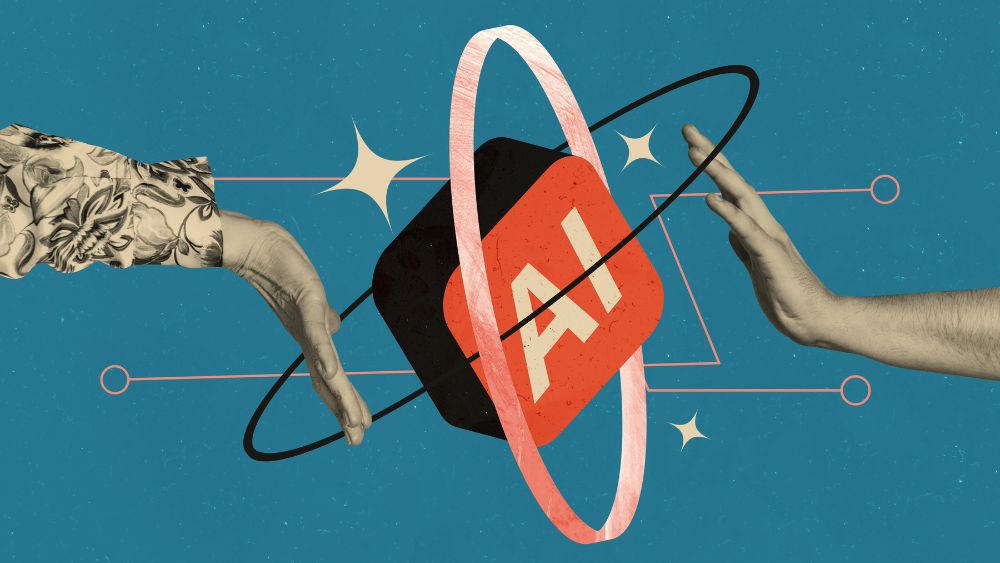
Artificial intelligence (AI) is both exacerbating the digital divide and finding new ways to bridge it.
AI is becoming further embedded into our daily lives and shaping the way charities interact digitally. With AI developing at such speed, there’s a risk that those people who are already digitally excluded, will be even more so.
The Good Foundation says that “introducing AI requires a careful approach, particularly when supporting people with low digital skills”. The foundation explains how AI can make people who aren’t digitally confident feel fearful, anxious, and overwhelmed.
One of the ways it’s responding to this is by including ‘an introduction to AI’ on its free digital skills learning platform, Learn My Way. It introduces the topic gently to avoid people becoming overwhelmed or disengaged, and by including ways that people might already be engaging with AI without realising it.
For charities themselves, a lack of technical expertise and financial resources is often a block to making the most of AI tools. In a recent survey, the giving platform, Neighbourly, found the greatest blocks to small charities and community groups using AI to be: lack of technical skills (56%); lack of understanding AI capabilities (48%) and limited financial resources (44%).
This could increase the digital divide within the charity sector. Larger organisations are more likely to have greater expertise and more funding to integrate AI tools into their systems. This puts them in a stronger position to take advantage of AI – whether that’s within fundraising, service delivery, or communications.
To remedy this, Neighbourly has partnered with Microsoft to run the Ai123 initiative which provides AI training to smaller charities. We also share some of the best resources for learning about AI in the charity sector.
On the flipside, there are increasing numbers of AI-driven tools that are making digital experiences more inclusive. These tools are using AI to help charities reach more diverse audiences, and to make digital platforms more fully accessible to users. Here are three examples,
In the UK, there are 16.1 million people with disabilities – approximately 24% of the population. Designing accessible digital platforms is crucial to having a wider reach. Accessible websites are generally easier to use and they promote inclusivity, which helps all users.
AI-powered accessibility audit tools can review entire websites, quickly list accessibility issues, and recommend improvements – all in line with the Web Content Accessibility Guidelines.
The Recite Me Accessibility Checker[MOU1] is just one product which helps to identify accessibility issues in real-time. That could include checking colour contrasts, suggesting layout adjustments, or checking font sizes.
Transcription software is increasingly dependent on AI and converts spoken words into text at an incredible speed. Transcribing video or audio content makes it accessible to people who are deaf or have a hearing impairment (according to the RNID, one in three adults in the UK are deaf, have hearing loss or tinnitus).
It can also help neurodiverse people to process information more easily or, for example, help users to understand content that’s not in their first language.
We share some of the best transcription software, including Otter.ai, Trint, and Transcribe.
AI-driven chatbots enable charities to provide an element of 24/7 support for users. This can be hugely helpful for offering support and advice for people who can’t access services during traditional work hours, whether that’s due to work schedules or caring responsibilities.
Chatbots use simple, conversational language, making information accessible to a wide audience. They can also guide users through online services or processes, which can help those who might otherwise find digital interfaces difficult to use.
And, if charities integrate chatbots into platforms like WhatsApp, they can reach people who don’t have access to desktops or broadband (for example, older people or those in rural locations).
Follow-up questions for CAI
How can AI-powered accessibility audits improve website inclusivity for disabled users?What strategies help small charities overcome AI adoption barriers like skill gaps?In what ways do AI chatbots enhance 24/7 support for digitally excluded users?How does AI transcription software increase content accessibility for neurodiverse people?What role does AI education play in reducing digital anxiety among low-skill users?




Our courses aim, in just three hours, to enhance soft skills and hard skills, boost your knowledge of finance and artificial intelligence, and supercharge your digital capabilities. Check out some of the incredible options by clicking here.

© 2022 Charity Digital Trust. All rights reserved