Insights
Training
On-demand



You are viewing 2 of your 2 free articles
We look at four giving personas to help charities engage with supporters


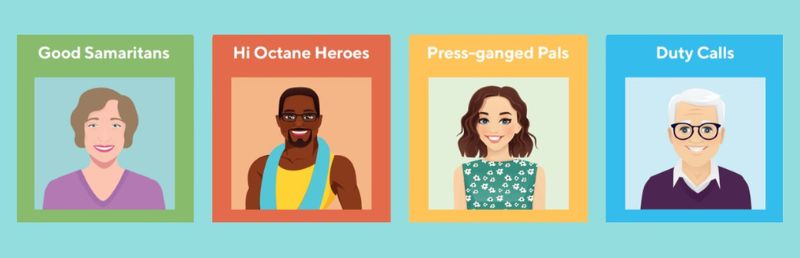
As a charity, you live and breathe your cause – it’s your reason for being, after all. But, while a core of loyal supporters undoubtedly share your passion, especially if they have a personal reason to be grateful, for many others, the charity that benefits from their donation or activity is almost a side issue.
So why do they do it?
For these people, support for charity is driven by social factors that have very little to do with the cause. They might be drawn in by a desire to be sociable and get involved in a group event, for example, or they might be keen to take part in a personal challenge. Or they might want to build social standing among friends or colleagues, or just lend support to family and friends who are fundraising.
A new report – The Fundraising Four – delves into these contrasting motivations and explores the differences between those who make an active decision to support a charity (the ‘committed’) and those who are driven by social factors (the ‘co-opted’).
The research, carried out by RedFox Research, found that over a third (37%) of donors mainly give because they are co-opted by someone they know, while only 49% feel they have a moral duty to give to charity.
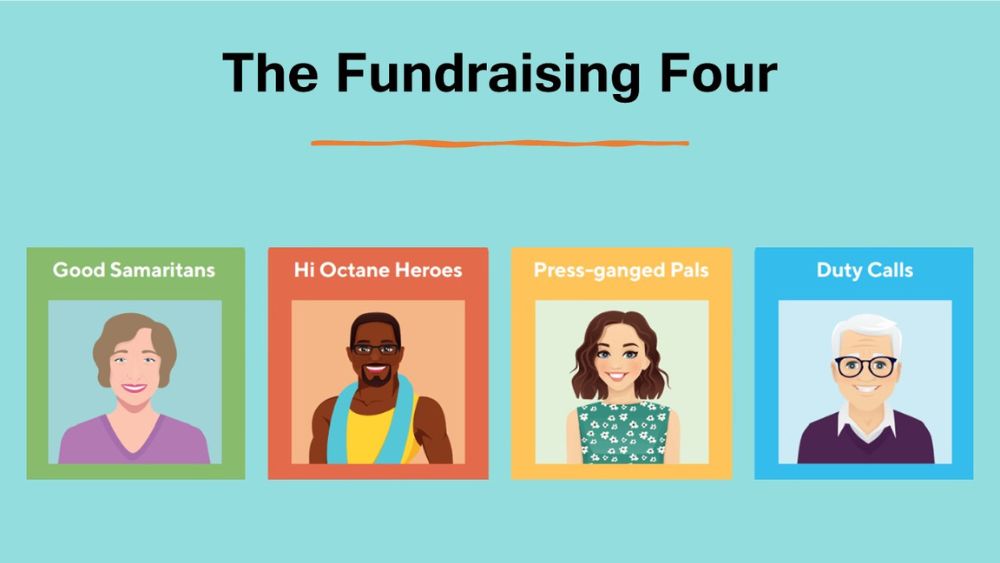
The research, based on profiling of over 2000 UK adults, identifies four different giving personas, each with distinct motivations and giving styles:
Follow-up questions for CAI
How can charities effectively engage Good Samaritans for long-term support?What strategies increase High-Octane Heroes' participation in fundraising events?How might charities reduce pressure on Press-Ganged Pals to maintain interest?What communication methods best build trust with the Duty Calls group?How do social motivations influence donor retention across different personas?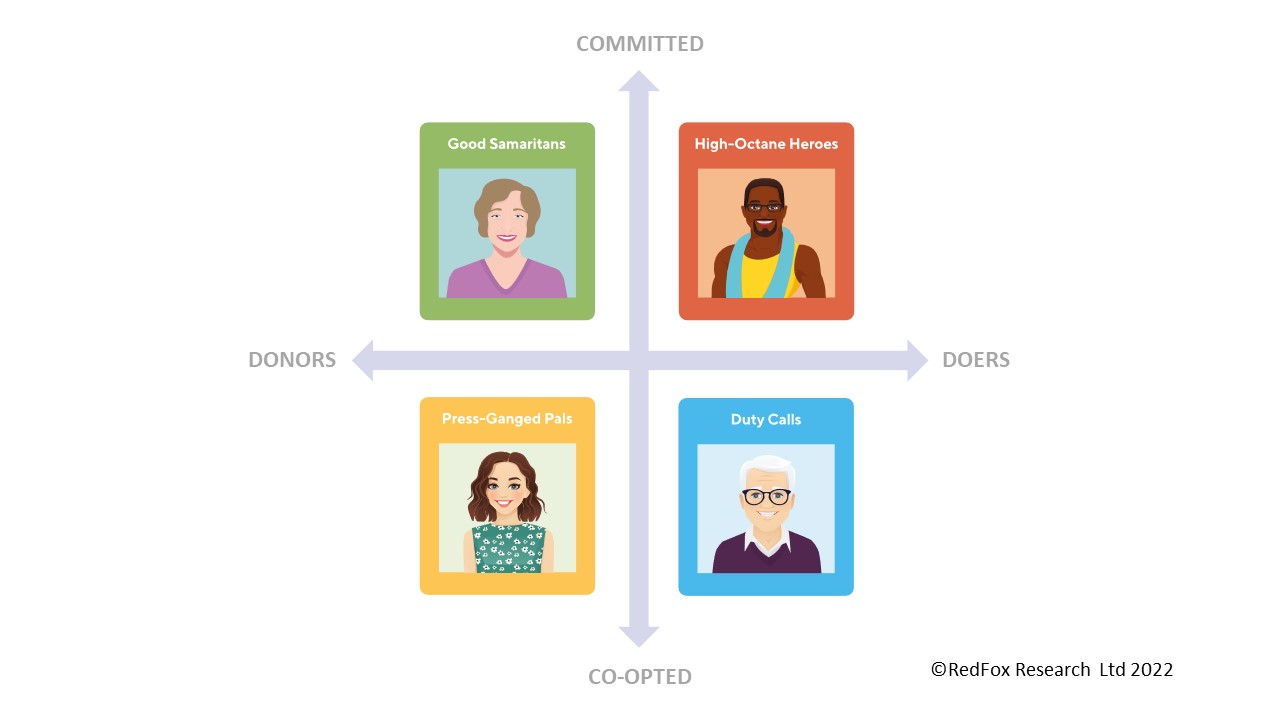
Understanding these differences could help charities in their targeting, campaign planning and communications. For example, while two – Good Samaritans and Duty Calls – are content to give money to charity, the remaining pair – High-Octane Heroes and Press-Ganged Pals – are the ‘doers’. Doers are more likely to get involved in fundraising events or even volunteer, and love to talk about their support for charity on social media.
Let’s look at each in a little more detail.
The largest group are the ‘Good Samaritans’. They are the committed core, frequent and regular givers who have a high level of trust in charities. They can appear low maintenance, giving anonymously and asking for little more than a thank you.
But RedFox warn that this is an aging group, with a significant number who are retired, and charities should not count on younger donors growing into this persona as they get older.
This is a niche but highly active group. These are the cheerleaders of fundraising, who love to get involved in group events and enjoy a challenge. They find raising money for charity incredibly rewarding and get a morale boost from doing so – and they’re the most active group when it comes to social media. Charities will recognise these as some of their most passionate and vocal supporters, but they are vulnerable to the next big trend.
The ‘joiners in’, Press-Ganged Pals get carried along by what’s going on around them, and sign up to group events largely to be sociable. They don’t find giving to charity particularly rewarding, but don’t like to be left out.
They’re happy to support friends and family with sponsorship, but sometimes feel a bit pressured with all of the requests they get. There’s a danger they’ll sign up but loose interest – and charities need to be careful this group don’t end up costing them money.
The smallest group, at 17% of the donor population, and also with an older age profile. These are dubbed ‘reluctant conformists’ because they don’t really ‘feel’ charity and do the minimum required to avoid standing out. They’re unlikely to be regular givers, and they shy away from events. With a low level of trust in charities, they are hard to influence.
To find out more about the persons and their profiles, download the full report below.






Our courses aim, in just three hours, to enhance soft skills and hard skills, boost your knowledge of finance and artificial intelligence, and supercharge your digital capabilities. Check out some of the incredible options by clicking here.

© 2022 Charity Digital Trust. All rights reserved